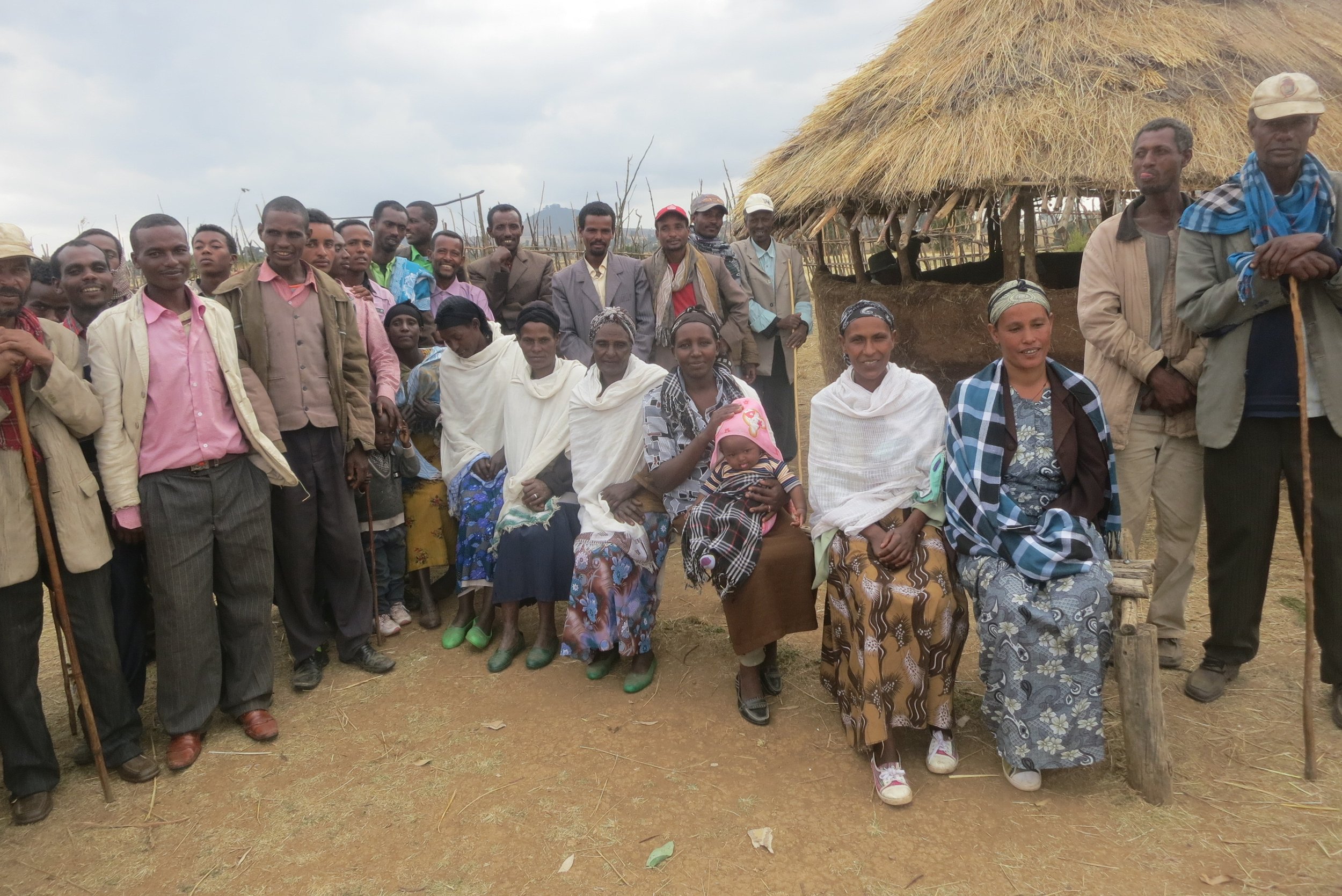
Community members in Bilo
We approach some of the many educational challenges in rural Oromia with community partnership, quality construction, provision of teaching material and additional support for girls.
Our Approach
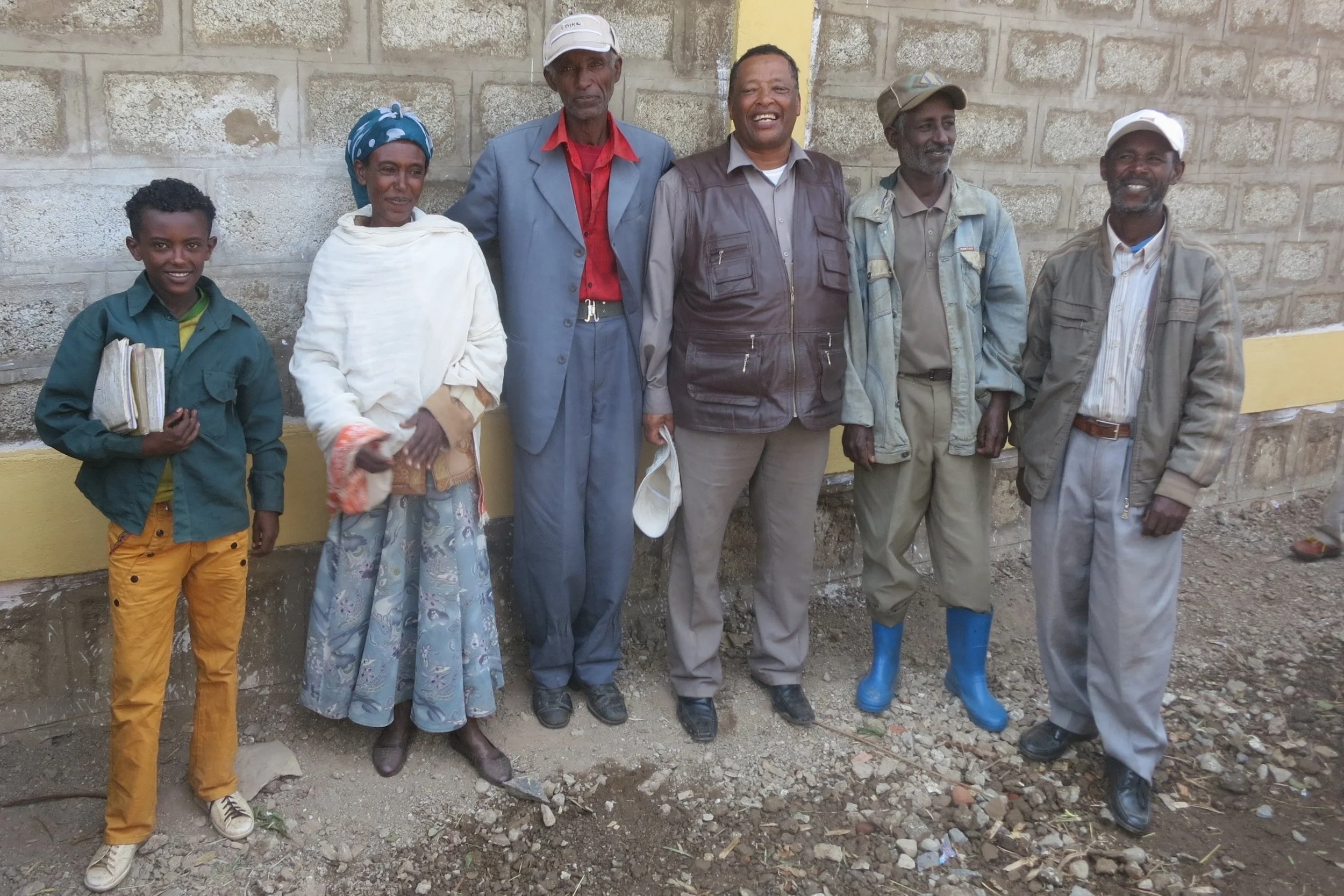
Gadissa Gobena and local school committee members
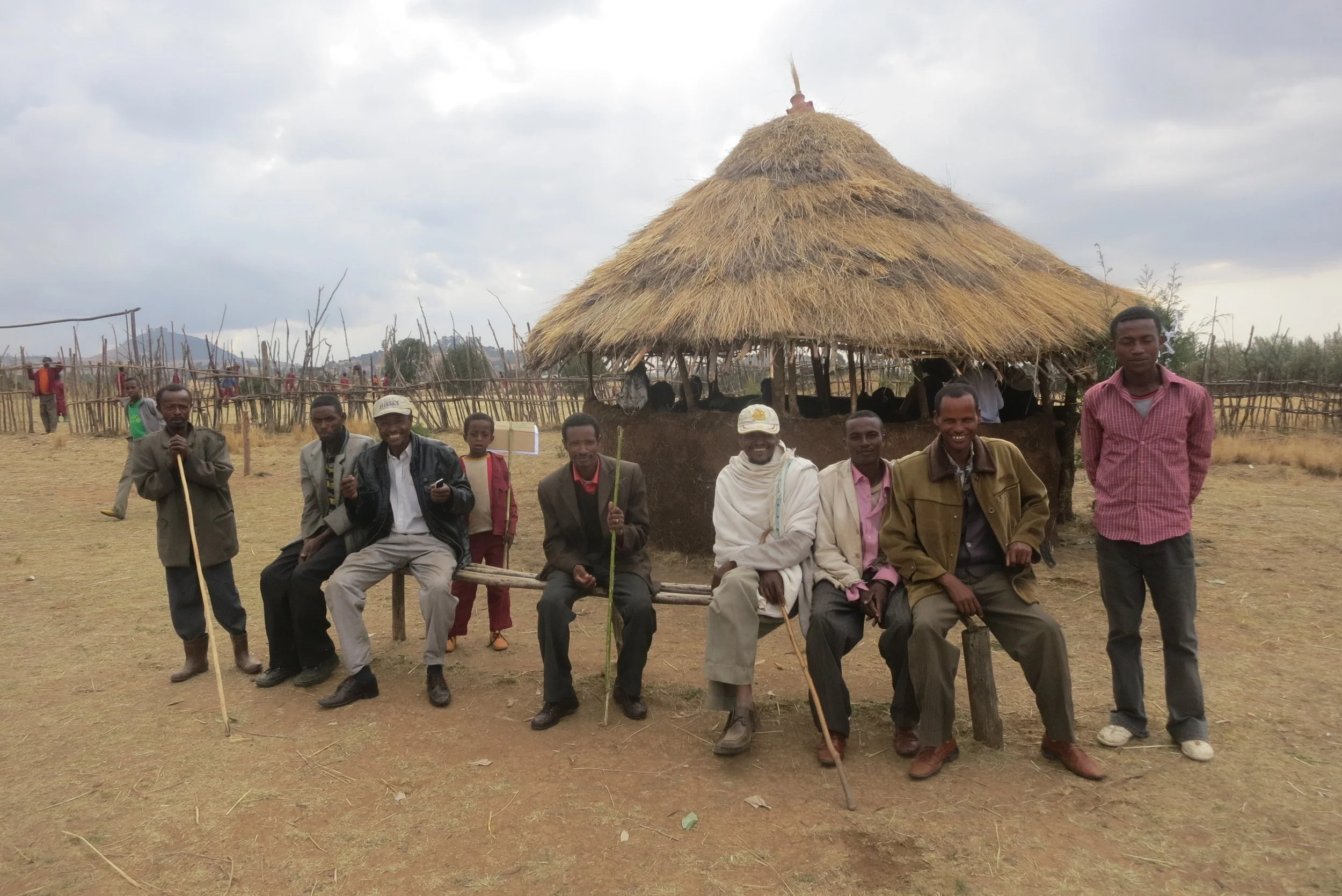
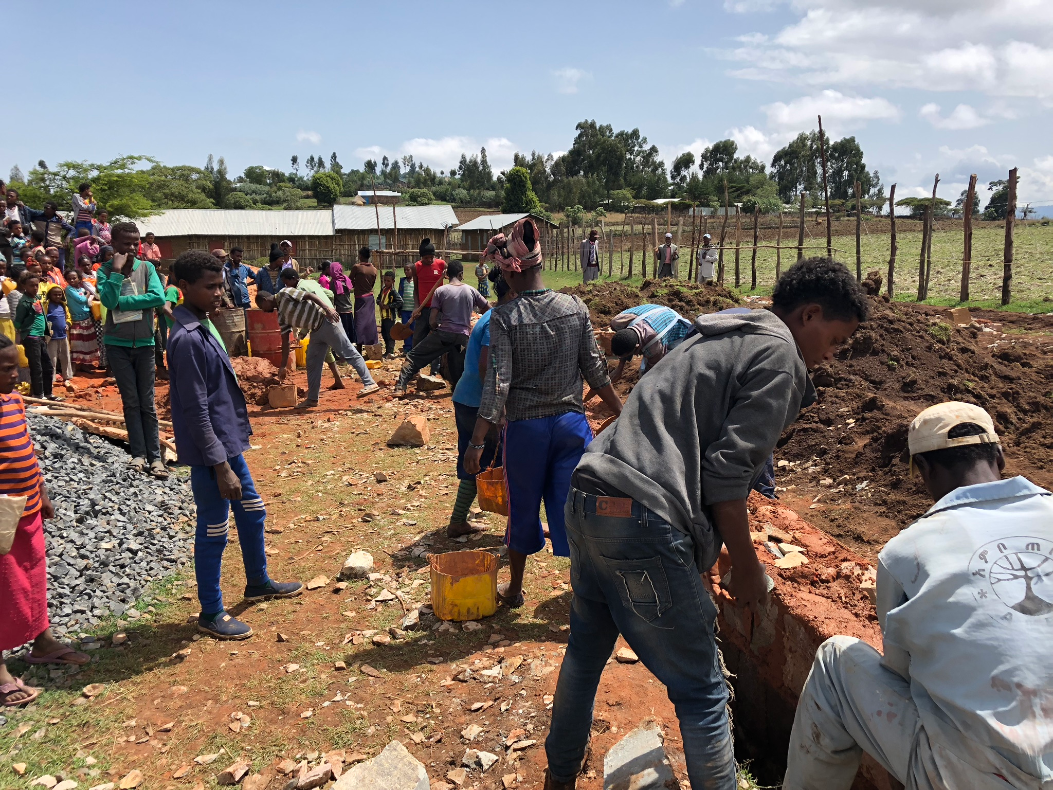
Local villagers and school committee members in Bilo
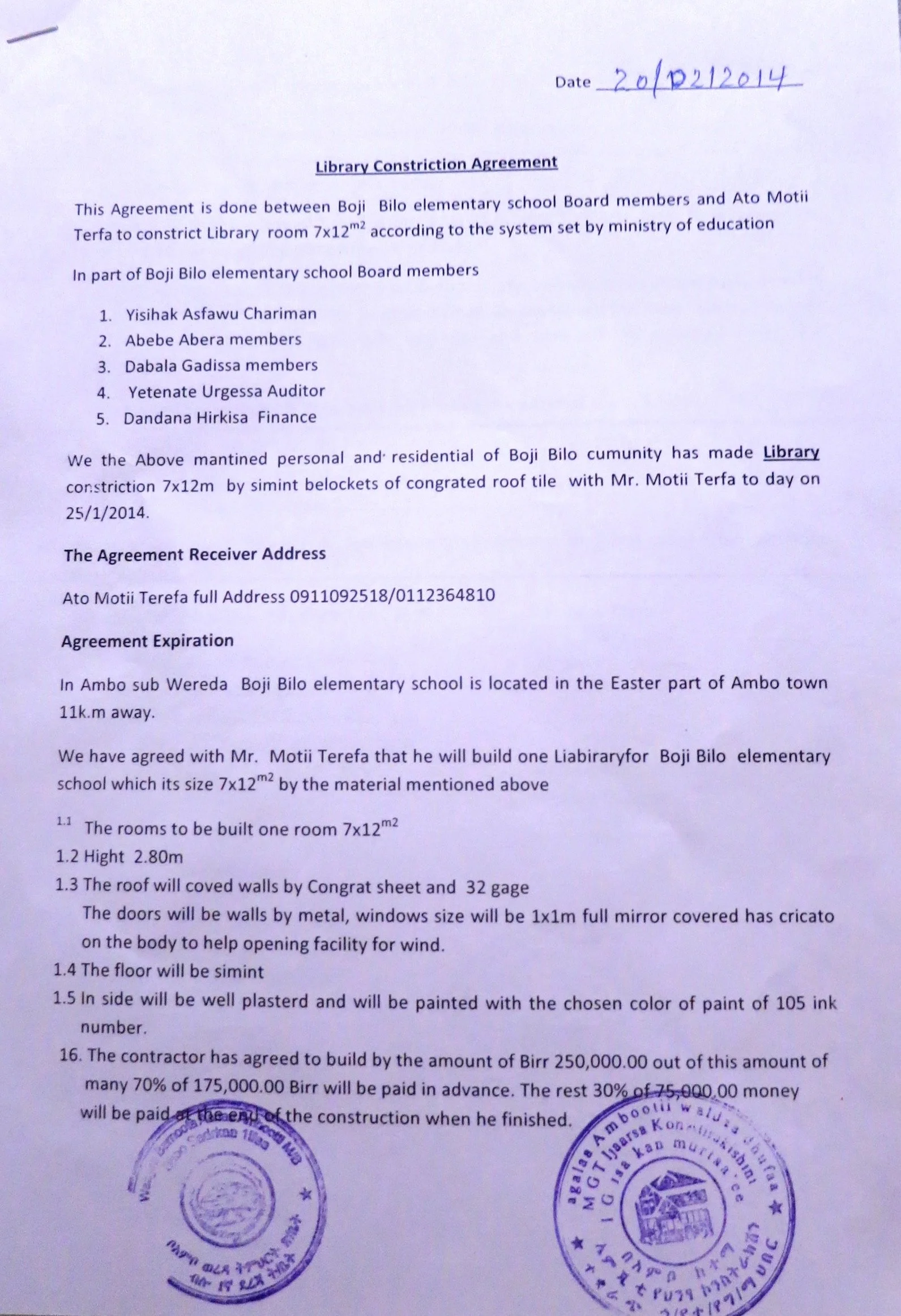
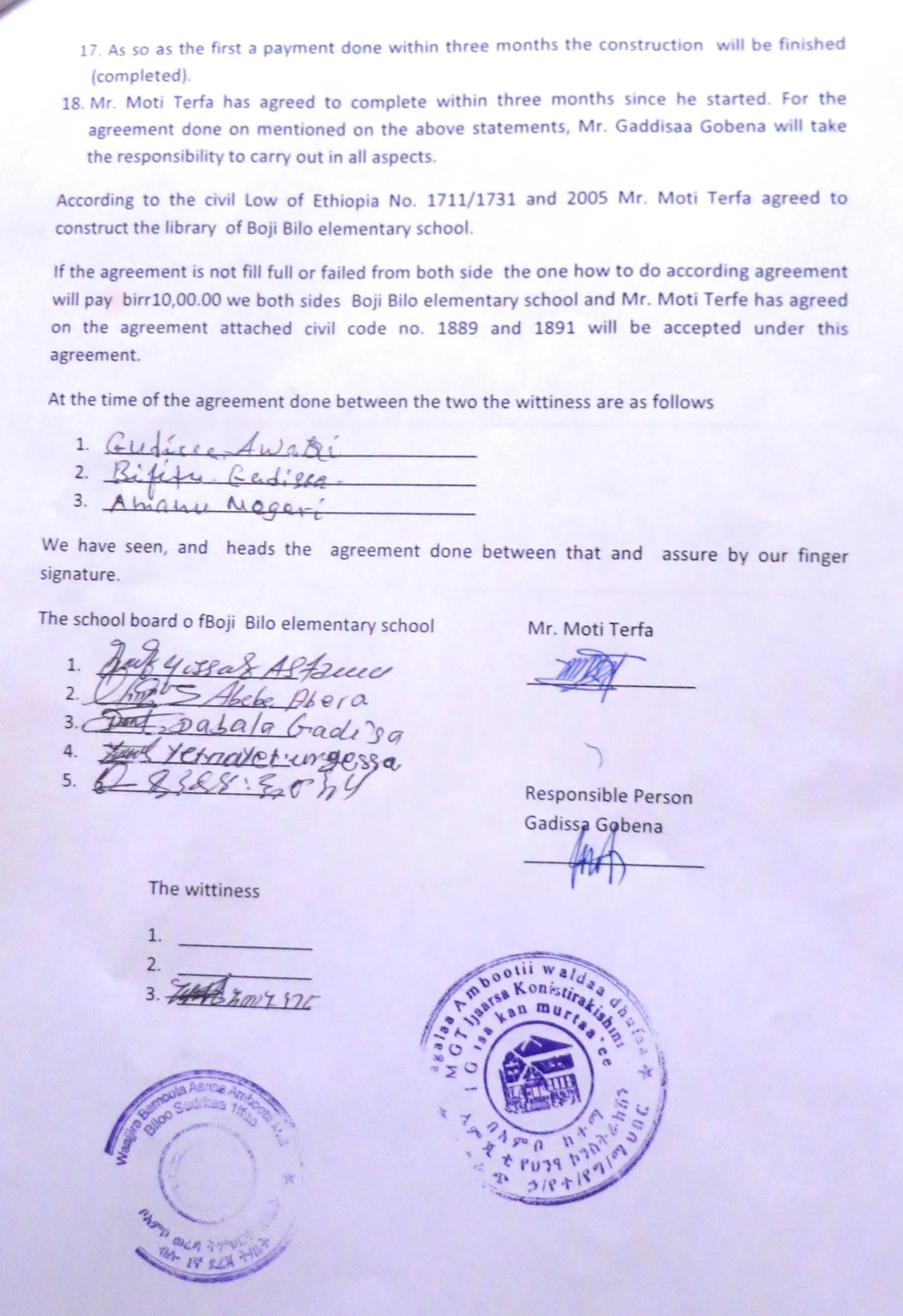
Example of building contract
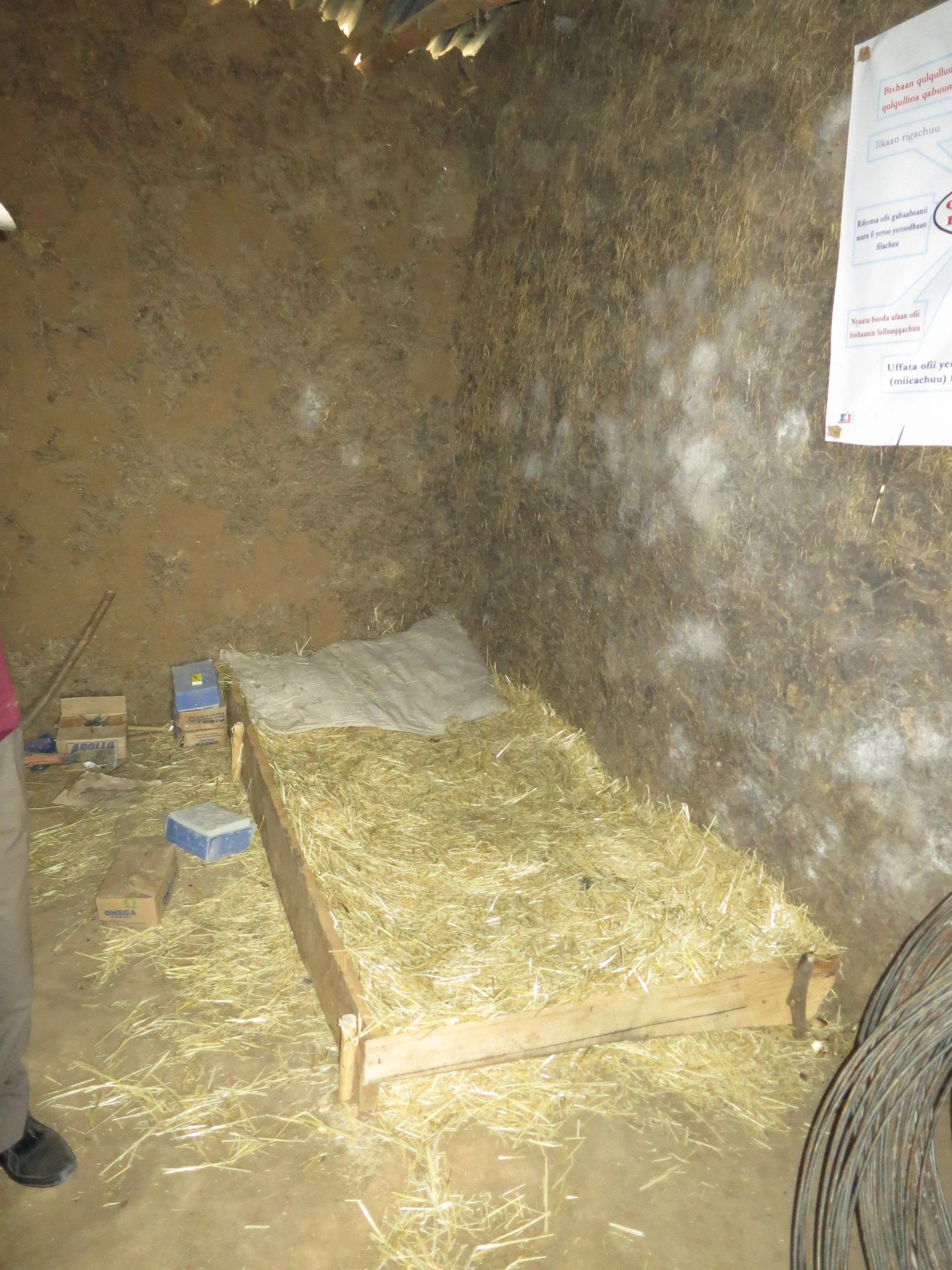
Moti’s bedroom while at work in Bilo
Construction details
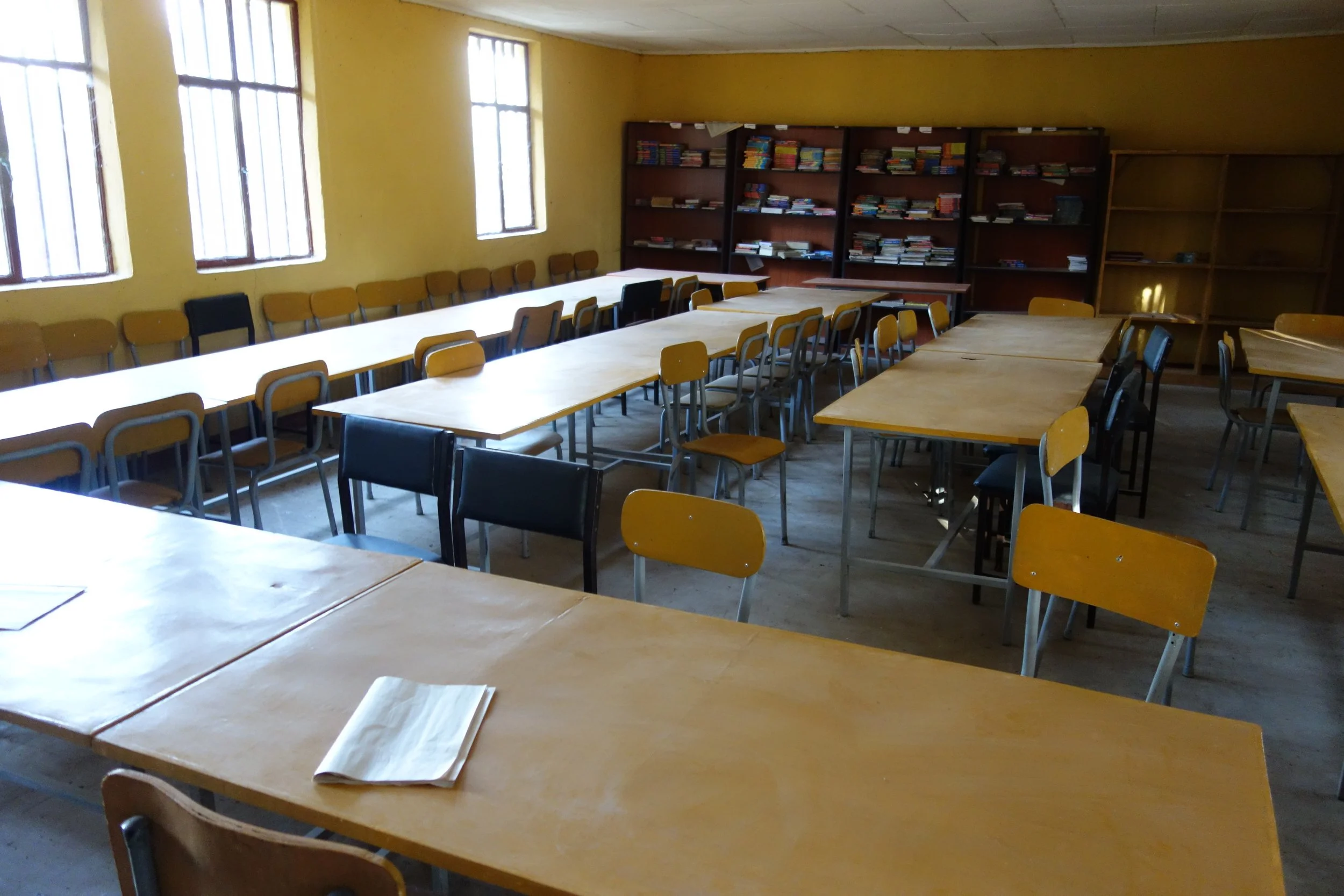
New library
-
A committee consisting of village elders, local authorities, school directors and parents will discuss details of the need for school buildings with our local project coordinator and representatives of EVS, and then agrees on a contract with EVS and the building contractor.
Our project coordinator grew up in the area of our school projects and has been a teacher in the area for many years. He is also a farmer, and therefore is very familiar with the local communities and problems they are facing.
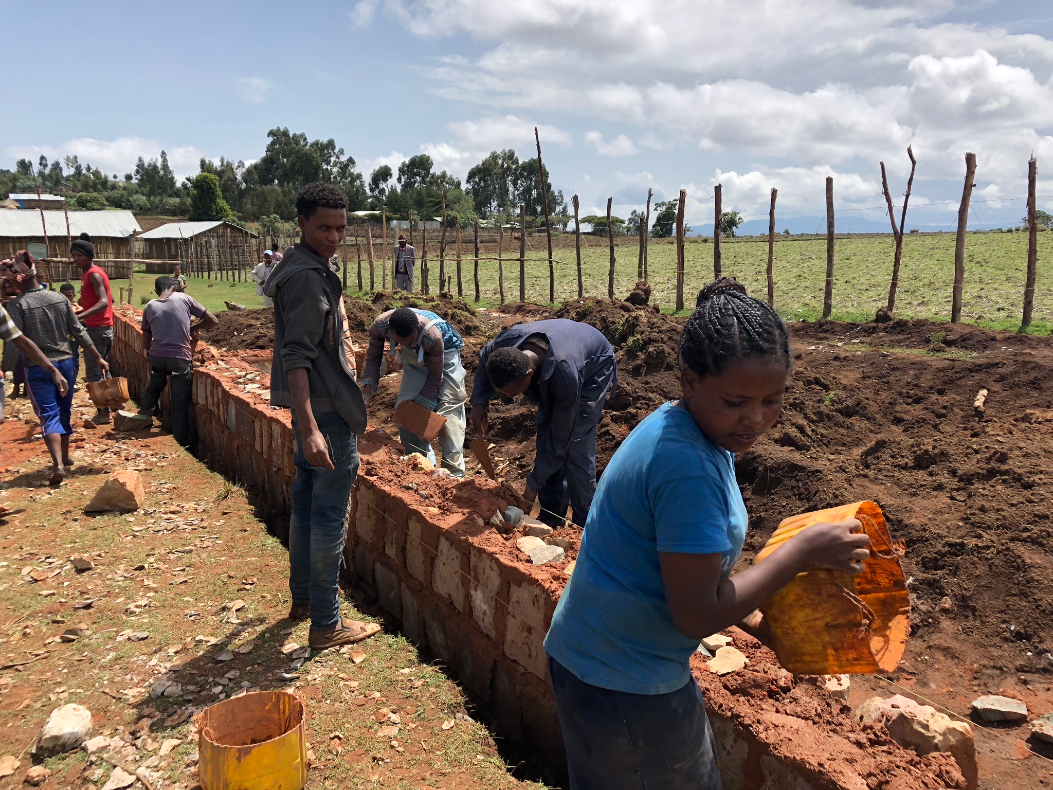
The local community, adults as well as children, is involved in the building process to create a sense of ownership.
We use local craftsmen to build furniture, ie. benches, tables and shelves, in an effort to involve community and to provide income for local businesses.
-
Previous school buildings and classrooms built with mud and stick technique, which is inexpensive and can be built with community labor.
This technique has many limitations affecting safety, durability, hygiene, thermal insulation, air quality and others.
EVS has contracted with experienced craftsmen and civil engineers who utilize the best locally available and affordable materials, ie. concrete floors and cinderblock walls reinforced with rebar iron, steel window and door frames, and corrugated metal roof material.
Design of the buildings conforms with governmental standards regarding size and height of classrooms.
-
Each new school will have a dedicated library room, equipped with shelves, desks, and chairs.
For small kindergarten children, we buy prefabricated furniture in local markets.
We provide textbooks if not available through governmental sources.
We provide extracurricular textbooks for beginning readers.
-
EVS provides adequate basic teaching and administrative material if not available through governmental sources.
EVS provides support for individual students if needed.
EVS has supported an after school tutoring program 3 days per week for 2 hours for all students who want to attend,
.
-
EVS has now incorporated the concept of a separate “girls’ room” into the planning for new school construction, and we also started adding these rooms to some of the existing schools.
These rooms are equipped with furniture, a bed, and plastic containers for girls to be able to wash their reusable menstrual pads.
Single-use menstruation pads are generally not available and affordable for women and girls in rural areas. EVS started a menstruation pad program in 2019, initially with pads purchased from Freweini Mebrahtu, who was honored as the CNN person of the year in 2019 for her dedication to improving access to education and menstrual health for Ethiopian girls.
Since 2020, EVS has employed a local seamstress, provided a sewing machine and an office, and menstruation pad kits are now locally produced with materials brought in from markets in Addis Ababa. These kits contain reusable washable pads and underwear.
So far about 1600 kits have been distributed to the girls in “our” schools.
-
We started a maintenance program to assure that the newly built schools will remain in good order.
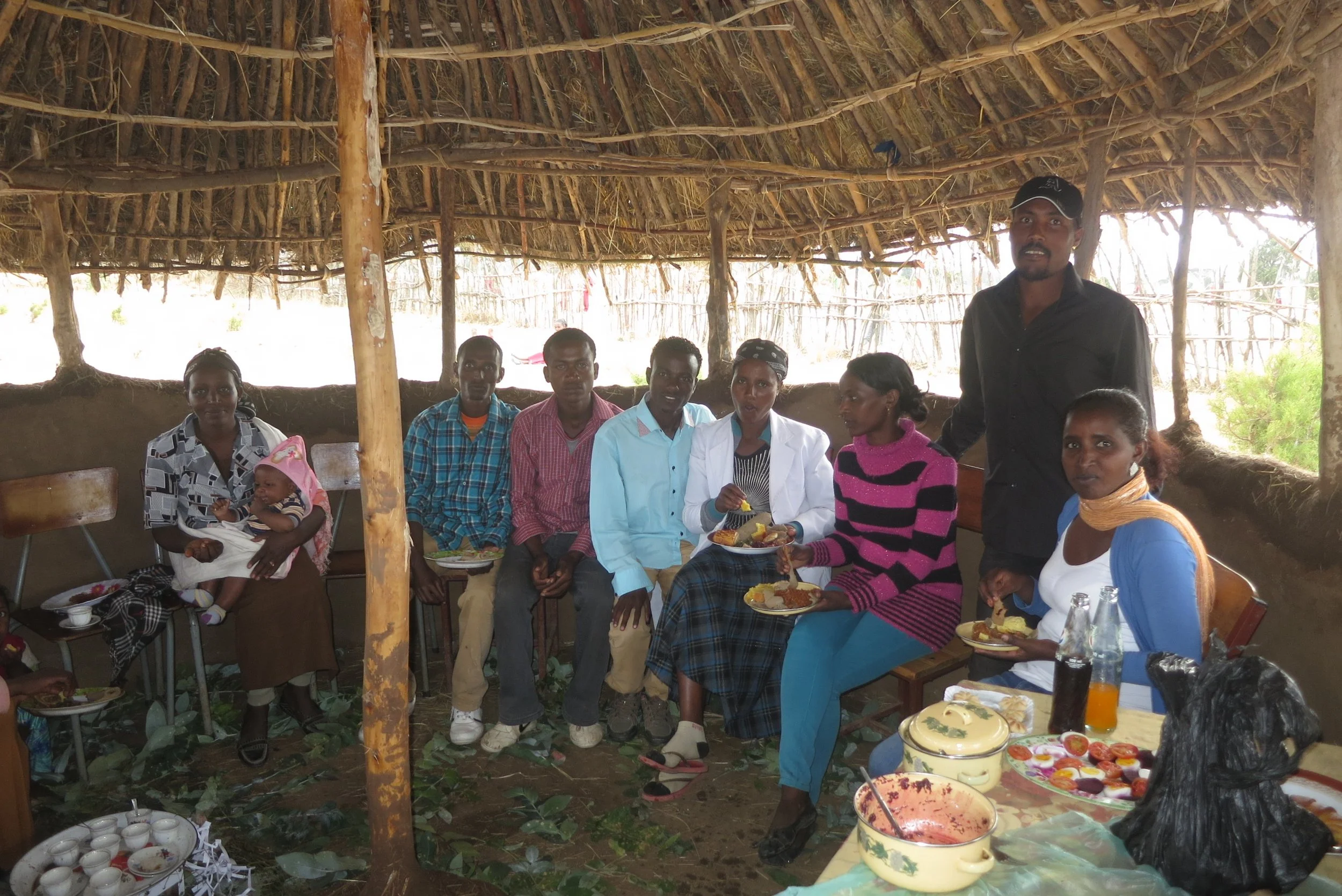
Villagers and school committee members in Bilo
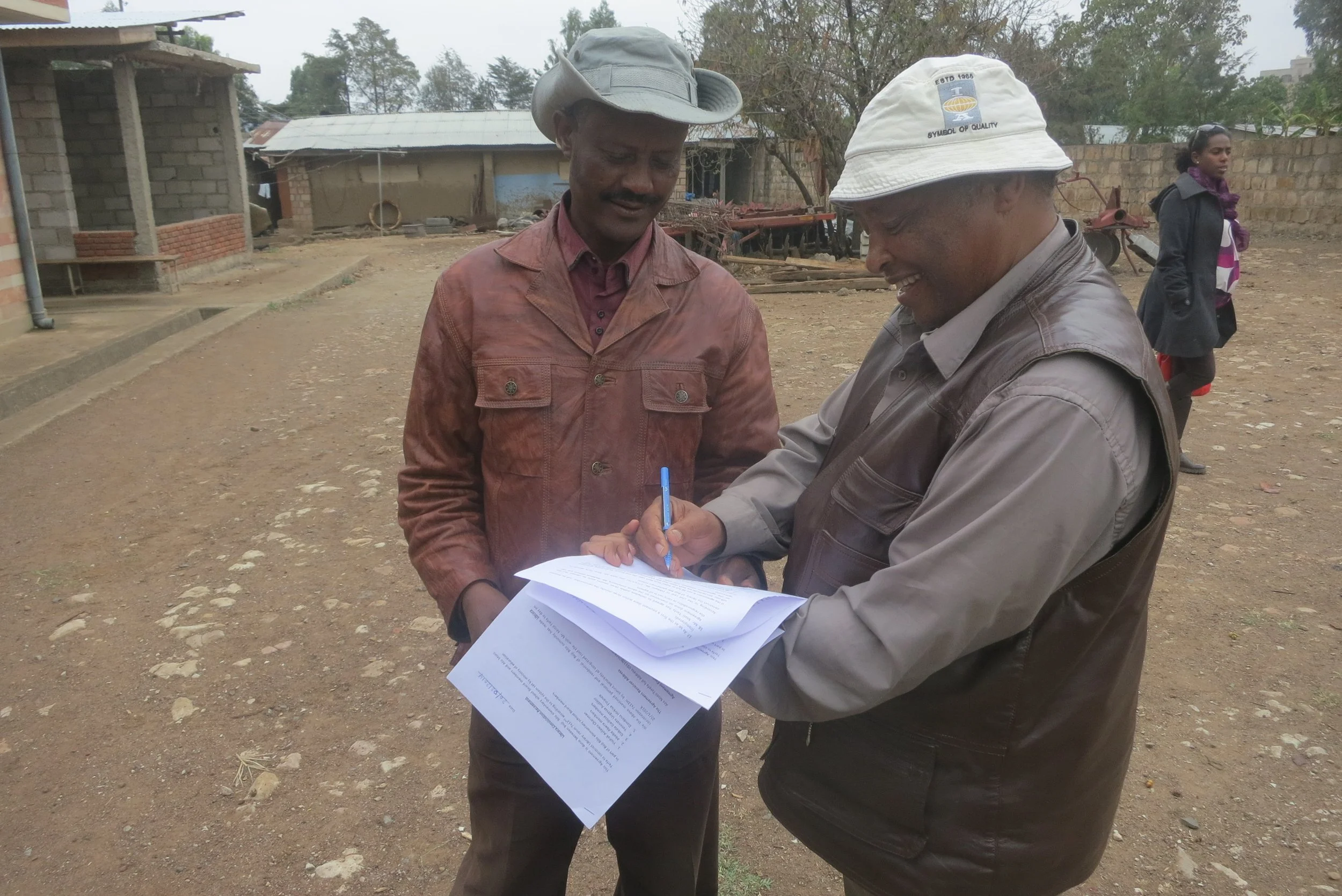
Moti and Gadissa signing contract
Villagers and students helping to build a foundation in Kube Chitu
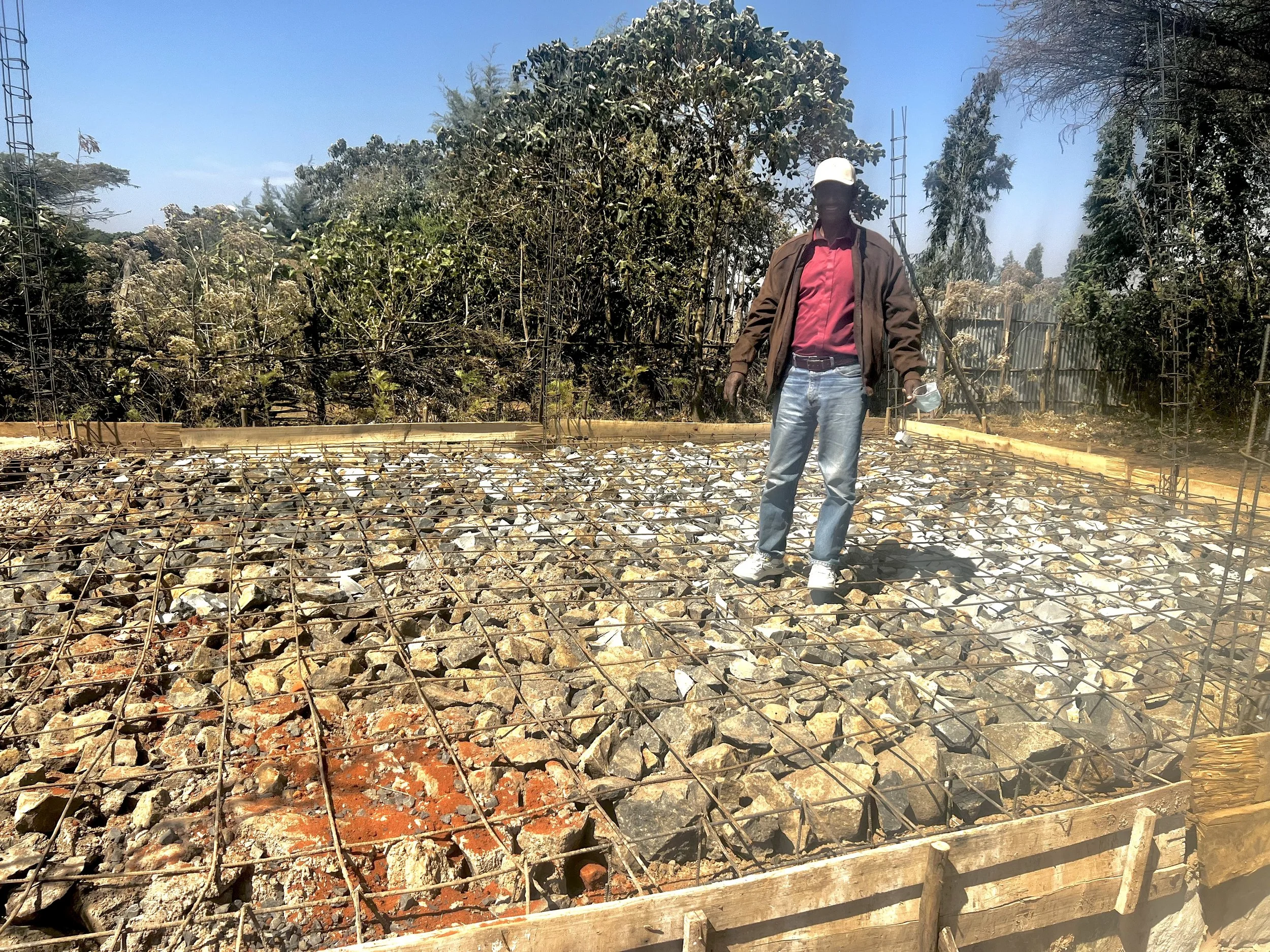
Moti checking foundation in Kube Chitu
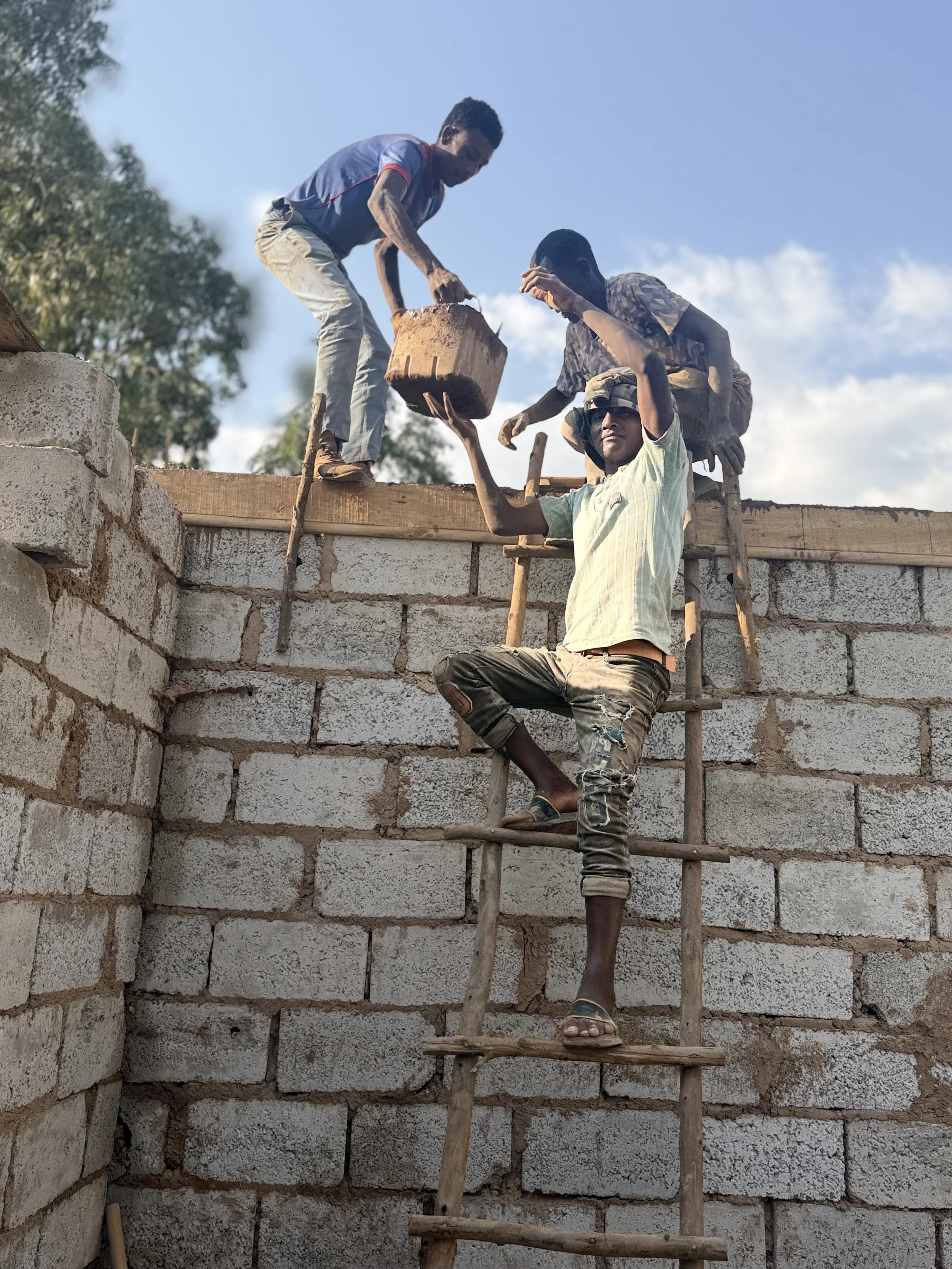
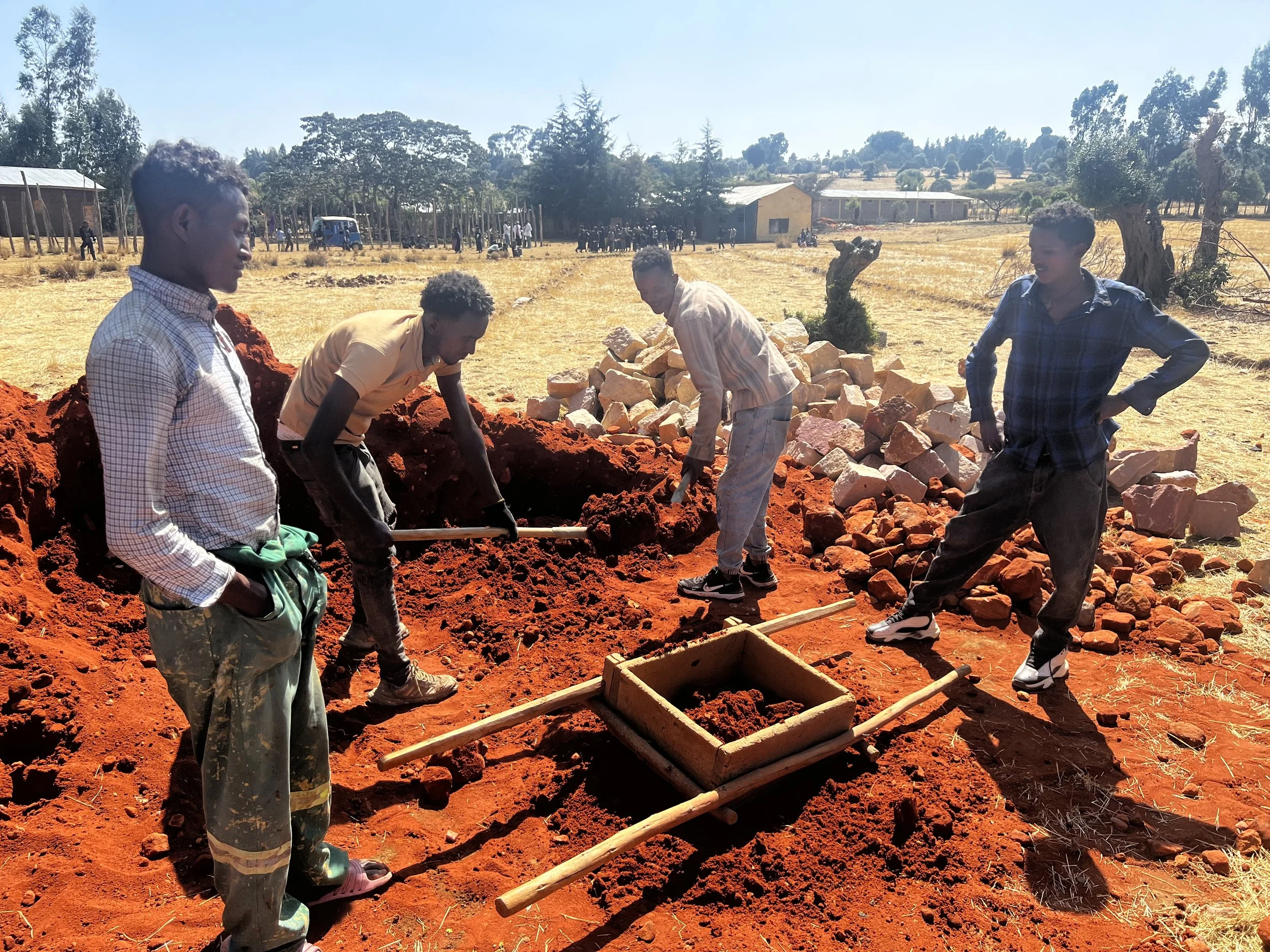
Construction team in Kora Bela
Girma in front of the finished block of classrooms in Kube Chitu
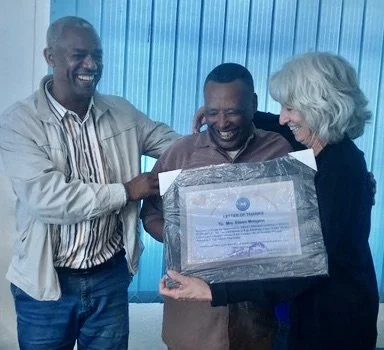
Eileen and Gadissa receiving local school district award

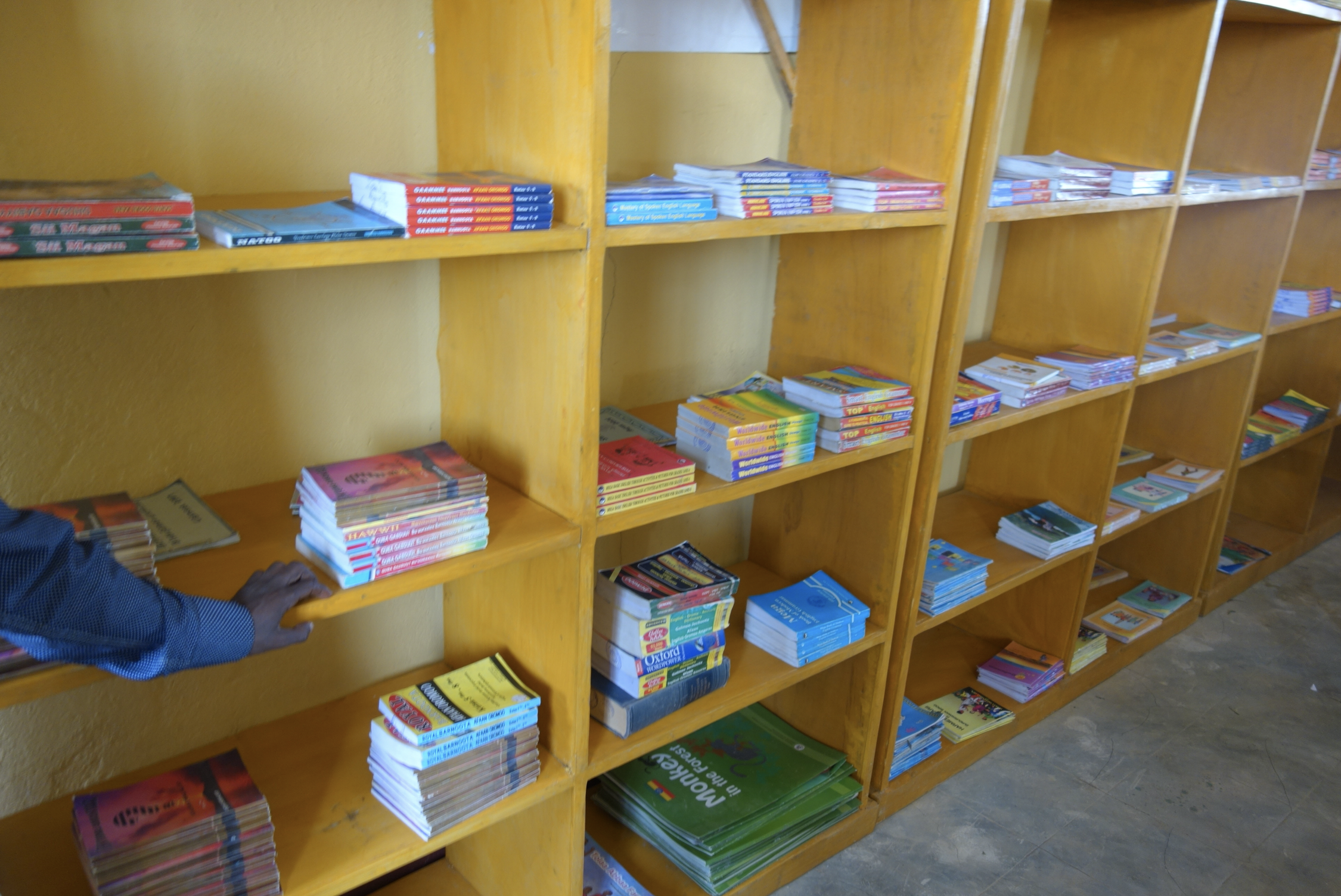
New shelves and text books
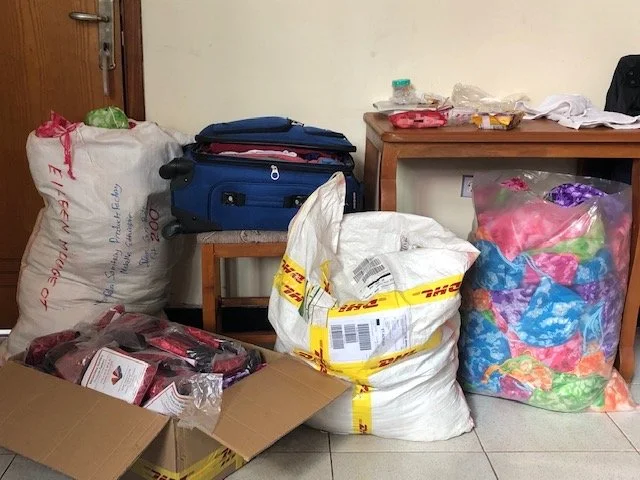
Girls’ pads were initially bought from Freweini Mebrahtu
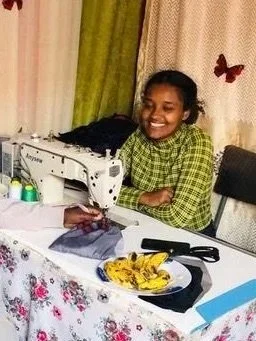
Lidiya at sewing machine
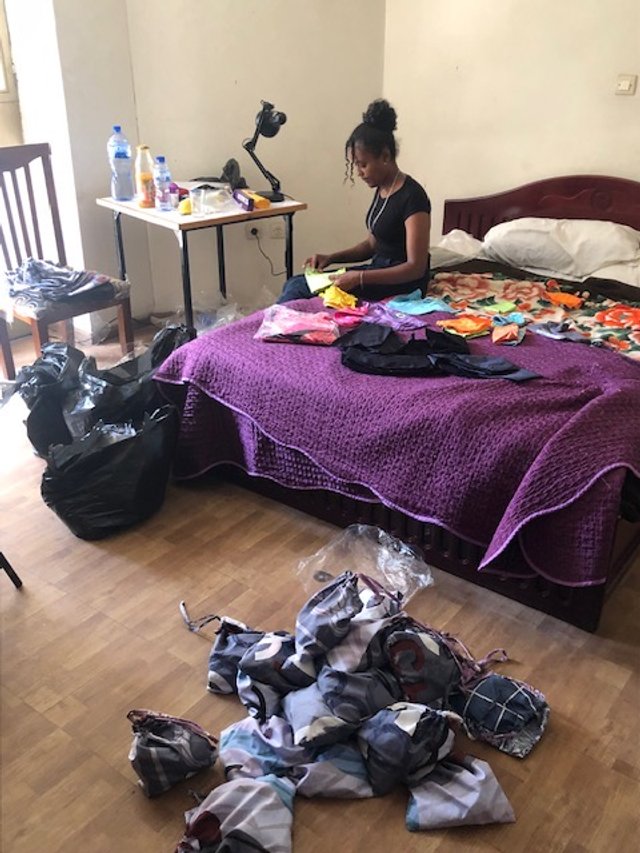
Lidiya arranging menstruation kits
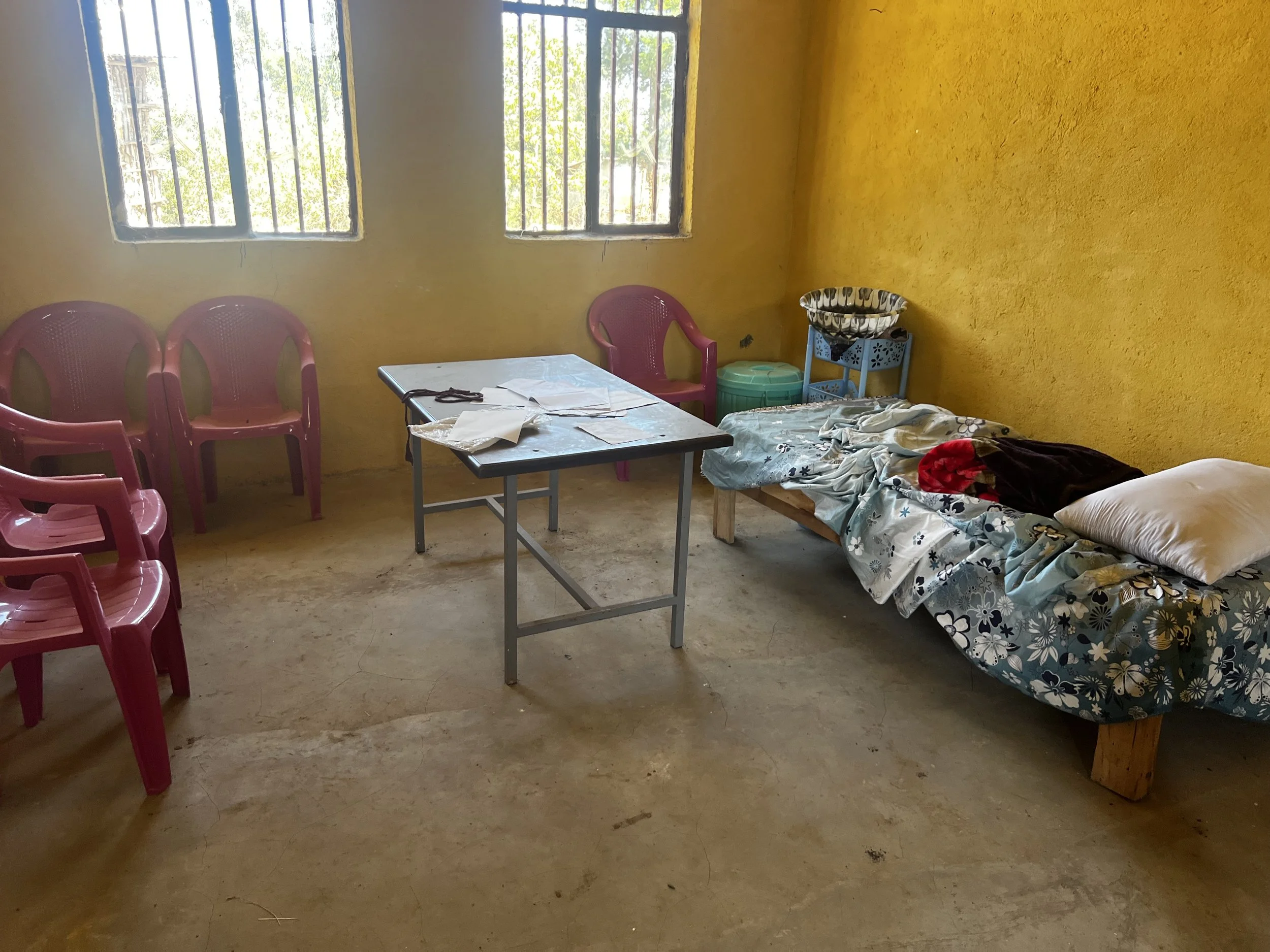
Girls' room
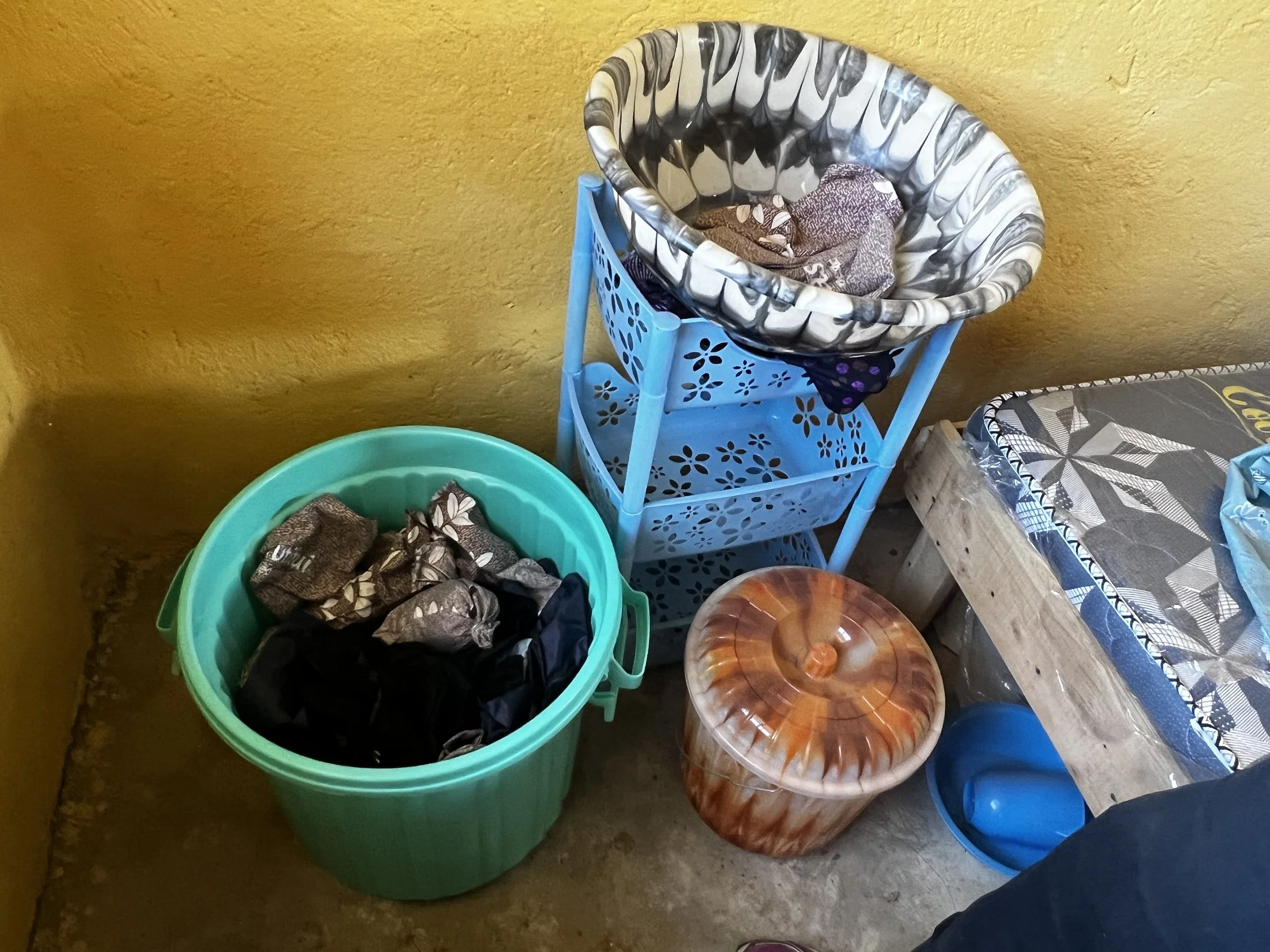
Girls' room pad washing containers
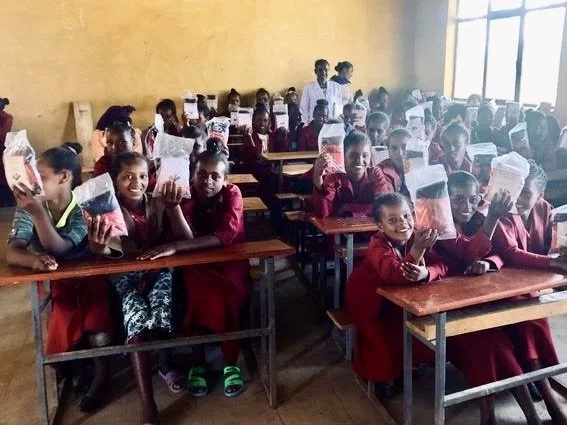
Girls holding pads
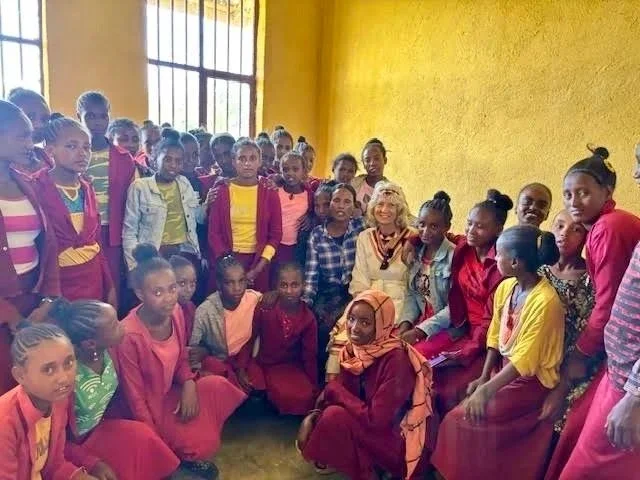
Girls in girls’ room